
Switching to a way of eating (not a diet) that’s free from gluten and dairy can feel complicated, especially when it comes to eating out or sitting down to a celebration meal. A lot of my clients assume it’s impossible, that a choice like this means endless restrictions, awkward looks or bland food. “But how will I manage when I’m invited somewhere? when Christmas comes round?” And yet, with a bit of organisation and a little creativity, it’s entirely possible to combine enjoyment, good company and your own dietary needs. In this article, I’ll tell you how to eat gluten-free and dairy-free, at home and, above all, when you’re out.
Eating without gluten or dairy isn’t only about restrictions. As you gradually discover new ways of doing things, of shopping, of cooking, you’ll see it’s mostly a matter of habit (though yes, I know habits aren’t always easy to change).
Before the how: why go gluten-free and dairy-free?
Some people choose (or their naturopath suggests) to drop gluten and dairy for several reasons. Before we look at how to manage without them, here’s a quick reminder of the why:
These foods can be poorly tolerated by the body, bringing on digestive trouble, chronic fatigue, inflammation or hormonal imbalances. In my practice I recommend removing them, at least temporarily, as I mention in the article on the foods to avoid with thyroid problems, most often in cases of gut or autoimmune issues such as Hashimoto’s or Graves’.
Gliadin and casein, the proteins found in gluten and dairy respectively, can irritate the gut lining in some people, increasing intestinal permeability (leaky gut). This is associated with inflammatory reactions and autoimmune diseases.
Over the festive season or when you’re out, staying consistent with these choices is essential, to avoid slipping back or any discomfort. It can seem restrictive at first, but the long-term benefits, like better energy, more digestive comfort and less inflammation, make the effort well worth it.
Eating gluten-free and dairy-free when you’re a guest
Being invited somewhere while keeping to gluten-free, dairy-free eating can feel tricky. But with a bit of communication and planning, it’s doable (even if it ruffles a few feathers at first). From experience, I promise you, people get used to it! (even if my own mum still asked me “why?” every other time).
In many cases (Hashimoto’s for example), it’s important, especially at the start of cutting these foods out, not to slip. I’ve had feedback from clients who did really well gluten- and dairy-free, feeling ten times better, and then the end-of-year celebrations came, they dived back in… and they felt the difference straight away, and it was all to do again.
Keeping it simple with your hosts
When you get an invitation, it’s worth letting your hosts know in advance about your dietary needs. Explain simply that you can’t eat gluten or dairy, for the sake of how you feel.
You could send your host this, to help them:
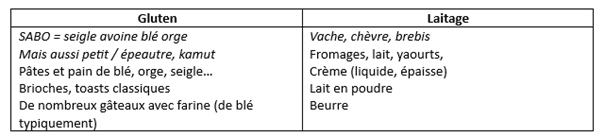
You can also send them the table a little further down.
To avoid making things complicated for the person hosting you, you can tell them you’ll fit in with whatever’s on offer. That usually does the trick 😊 More often than not, your host will be happy to make simple swaps, like cooking rice instead of pasta, or serving the meat without the sauce. And if not, you can always:
- Offer to bring a dish you can eat. Who knows, your host or the other guests might love it (and next time, maybe they’ll be more open to making something special).
- Tell them: “A salad or a plate of vegetables will suit me perfectly“, or “I’ll bring my own gluten-free bread”, or: I’ll cook myself something (when you’re staying for more than a day).
Avoiding social friction
Shared meals are about being together. It helps not to give the impression that your way of eating is a problem. By staying flexible and keeping the conversation open, you put your hosts at ease. If a dish doesn’t work for you, eat what does, or finish your meal once you’re home, without making a drama of it. From my own life: this one matters especially with the in-laws! 😉
Little by little, your hosts will get used to it, and it’ll all go smoothly.

Eating gluten-free and dairy-free at a restaurant: practical tips
If you can: choose the restaurant
Often the restaurant is chosen as a group. If not, do ask for the name of the place in advance and check they have options that work for you. If they don’t quite, you’ll probably still find a dish that’s fine, though maybe not quite filling enough 🙂 so bring something to top it up.
Some restaurants have options that work for gluten-free, dairy-free eating (although in France, most don’t always list allergens on the menu):
- In brasseries: you can often go for plain salmon or meat, with green beans and rice, say.
- In an Italian (pizzeria or pasta place): you’ll usually find a Niçoise or Caesar salad (ask for it without cheese or croutons).
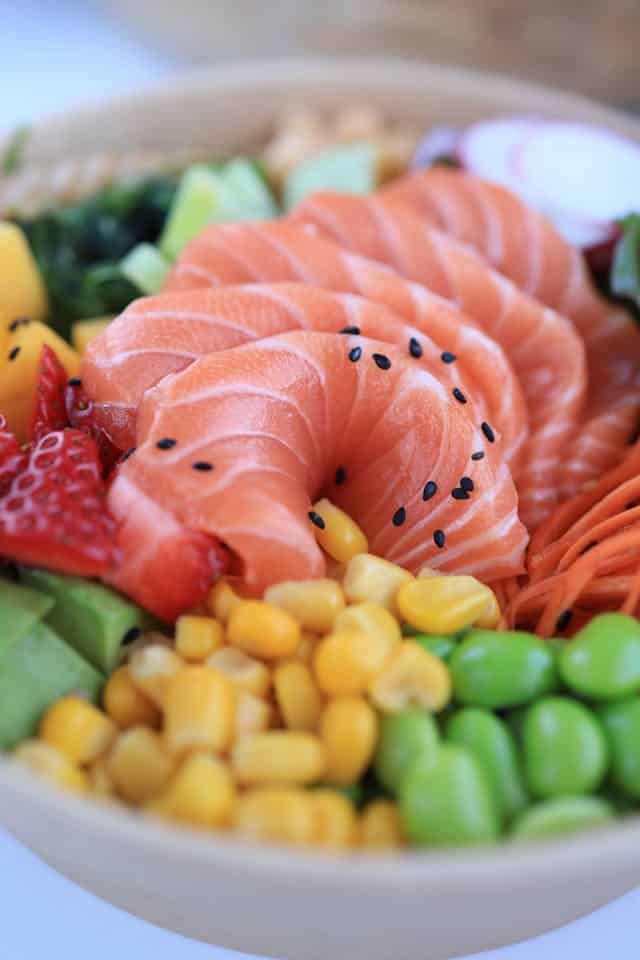
- Japanese restaurants: sushi, sashimi and rice-based dishes are often free from gluten and dairy (do ask whether the soy sauce contains gluten, or go without).
- Mediterranean cooking: it often puts vegetables, fish and grilled meats first, with rice or potatoes, and no gluten-based sauce or cream.
- Vegan or specialist restaurants: they sometimes have dishes free from dairy, and some even gluten-free.
Preparing for your visit
Before you go, do check the menu online or call the restaurant to ask. Let them know what you need: “I don’t eat gluten or dairy, do you have any options that would suit?”, and the same when you order.
Lunch during the working day
A lot of my clients have no canteen at work and go out for lunch. In that case it’s a matter of going for the ideas above, or the poke bowls you find just about everywhere now… or bringing your own tupperware… to avoid the last-minute fix: fast food like a burger, a sandwich or a bakery quiche.
At home
Organisation is the key word, a little courage too if you’re not used to cooking, and some help if you can 🙂 when you’re tired.
- Make your shopping list, including: sweet potatoes, squash.
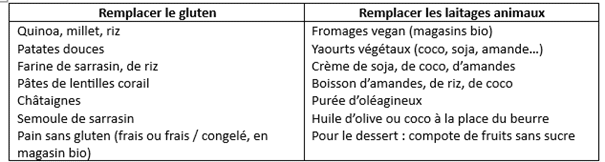
- Keep in the cupboards: quinoa, rice, pulses, millet, unsweetened fruit purée, buckwheat and rice flour, jarred chestnuts, red lentil pasta, buckwheat semolina; almond and sesame butter…, soya, rice and almond cream; plant-based drinks (rice, coconut, almond, soya…).
- Keep in the freezer: sliced gluten-free bread.
Gluten-free, dairy-free festive menus: how to do it?
You can build on the ideas above, the tables in particular, and recipe ideas online… to work out how to do it gluten-free and dairy-free. Here’s a festive menu that still tastes good:
Starter: winter vegetable tartlets with beetroot hummus
- Ingredients (serves 8):
- Pastry: 200 g rice flour, 100 g buckwheat flour, 100 g olive oil, 100 ml water.
- Filling: 4 cooked beetroots, 200 g chickpeas, lemon juice, 4 tbsp sesame paste, 4 carrots, 2 turnips, 1 butternut squash.
- Method:
- Mix the pastry ingredients, form a ball and leave to rest for 30 min. Roll out and line tartlet tins. Bake blind for 15 min at 180°C.
- Blend the beetroot, chickpeas, sesame paste and lemon into a smooth hummus.
- Roast the vegetables (carrots, turnip, squash), cut into cubes, with a drizzle of olive oil and some thyme.
- Fill the tartlets with the hummus and roasted vegetables. Lovely cold or warm!
Main: turkey with roasted vegetables
- Ingredients: turkey breast, carrots, sweet potatoes, parsnips, olive oil, herbs (thyme, rosemary).
- Method: marinate the turkey with olive oil and herbs. Roast it with the vegetables, seasoned with salt and mild spices and tossed in oil too.
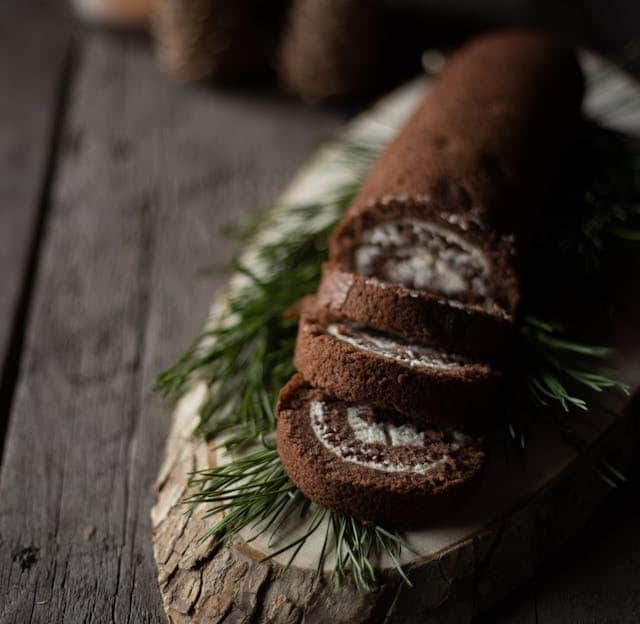
Dessert: rolled log with coconut cream and dark chocolate
Ingredients (serves 8)
- Sponge:
- 100 g rice flour
- 30 g arrowroot starch (from health-food shops)
- 4 eggs
- 100 g coconut sugar
- 2 tbsp unsweetened cocoa
- Cream:
- 200 ml cold coconut cream
- 50 g icing sugar (optional)
- Ganache:
- 100 g dairy-free dark chocolate, 70%
- 50 ml almond plant-milk
Method
- Sponge:
- Preheat the oven to 180°C.
- Separate the yolks from the whites. Whisk the yolks with the sugar until pale. Fold in the sifted flour, starch and cocoa.
- Whisk the whites to stiff peaks and fold them in gently. Spread the batter on a baking tray lined with greaseproof paper.
- Bake for 10-12 minutes. Turn the sponge out onto a damp tea towel as soon as it comes out, peel off the paper and roll it up gently to shape it. Leave to cool.
- Coconut cream:
- Whip the well-chilled coconut cream to a mousse-like texture. Add the icing sugar if you like.
- Ganache:
- Melt the chocolate with the plant-milk over a bain-marie until smooth.
- Assembly:
- Unroll the sponge, spread with the coconut cream, then roll it up again.
- Cover the log with ganache. Decorate it if you fancy.
In closing: how to eat gluten-free and dairy-free
There are so many ways to eat while respecting your particular needs. I hope this article on “how to eat gluten-free and dairy-free” has reassured and helped you.
The main thing is to come at it calmly and with a bit of planning: plan ahead, communicate kindly, and explore the alternatives. You do get used to it. And the way it makes you feel makes you want to keep going. For me, I don’t like the taste of a traditional baguette at all any more: it just feels like sugar, and bland. Some clients, once they’ve cut it out, no longer like the smell of cheese, and so they happily do without.
FAQ
Can you really eat gluten-free and dairy-free when you eat out?
Yes. It takes a little planning: a word with your host or a look at the menu beforehand, and a backup snack in your bag. Brasseries, Japanese, Italian and Mediterranean places nearly always have something that works, and most hosts are happy to make a simple swap.
Do I have to give up festive meals and treats?
Not at all. You can put together a whole festive menu, starter to dessert, with no gluten or dairy, and still enjoy it. There’s a sample menu in this article, log included.
Why cut out gluten and dairy in the first place?
For some people these foods are poorly tolerated and can feed digestive trouble, fatigue, inflammation or hormonal imbalance. In my practice I often suggest removing them, at least for a while, especially with gut or autoimmune issues like Hashimoto’s or Graves’. It’s best looked at with your naturopath and your doctor.
How long before it feels normal?
Mostly it’s a matter of habit. Once your cupboards are stocked and you’ve found your go-to meals and places, it stops feeling like an effort. Many people tell me that after a while they simply stop fancying the old foods.

I’m Céline Jablonski, a certified naturopath in Paris and online, a member of the Syndicat des Professionnels de la Naturopathie, and a trainer at a naturopathy school. I help people regain physical and emotional balance through naturopathic techniques (nutrition, physical activity, stress management, the use of plants…).
Through this blog, I share, in an accessible way, knowledge and experiences I find useful, to help you feel better.
This advice is not a substitute for, and should not stop you from, consulting your healthcare professional.