
We often hear that we should “replace sugar”. But with what? And also… why?
In naturopathy, the question is not only about calories. It touches on blood-sugar balance, the microbiome, inflammation, vitality… and even our relationship with pleasure.
In this article, I’m deliberately not going to talk about artificial sweeteners (like aspartame… and to think that at my grandmother’s when I was little, I ate loads of it on its own, I loved it!!). Artificial sweeteners could disturb the balance of the gut microbiome, which is involved in regulating blood sugar and inflammation. They send the brain a “sweet taste” signal with no real energy intake, which could desynchronise the metabolic response.
This disconnect could influence satiety hormones like GLP-1. Some studies also observe later food compensation (see extract below)
Let’s stick to more natural alternatives, with or without calories: whole sugar (and dates), honey, agave syrup, maple syrup, coconut sugar, stevia, xylitol, and the newest one: allulose.
For each, we’ll look at its advantages… but also its limits.
But before we look at “which sweetener to choose in naturopathy“, one question is worth asking:
Which sweetener to choose in naturopathy: the key points:
-
The best sweetener… is often to use less of it: the palate can get used to a more natural level of sweetness again.
-
So-called “natural” sugars (whole sugar, honey, dates…) are still sugars: more interesting nutritionally, but to be used in moderation.
- Sweeteners with no effect on blood sugar (stevia, allulose, xylitol) can be useful depending on the metabolic context, but also have their limits (e.g. digestive tolerance…).
-
In naturopathy, the choice depends above all on the person: blood sugar, microbiome, digestion… and relationship with sweet taste.
Which sweetener to choose in naturopathy… But first, do you need to sweeten at all?
The sweet taste is innate. That’s normal, it’s reassuring, and we need carbohydrates (the brain alone uses 5 grams of glucose an hour). So I understand why people ask “which sweetener to choose in naturopathy“?
But our tolerance threshold, and our craving… adapts.
The more sweet food we eat, the more we need to feel the same pleasure. In fact, I don’t know if you saw that documentary on Arte (whose name I’ve forgotten) showing studies with mice more drawn to sugar than to cocaine.
Gradually, the palate loses its sensitivity. An apple no longer seems sweet enough. A plain yoghurt tastes bland. We add more… almost automatically (just like salt, by the way: salting a dish before even tasting it, sound familiar?). My children were used to eating sugar-free yoghurts when they were tiny, and after a stay somewhere (I won’t say here), there was no chance of them eating a yoghurt with no added sugar….
Physiologically, this repeated stimulation leads to insulin spikes, puts demand on the pancreas and can, in the long term, contribute to blood-sugar dysregulation.
And the microbiome? A regular excess of sugar encourages certain bacterial imbalances and encourages dysbiosis (an imbalance of the microbiome).
Before looking for the “best” sweetener, it’s therefore sometimes more to the point to ask:
can we simply cut down?

Whole sugar and dates: better than white sugar?
It’s actually my first piece of advice when someone is used to eating cakes, industrial ones in particular.
Making your own cakes, and replacing white sugar, an ultra-refined product stripped of its minerals, with whole sugar (or honey), which keeps some of its vitamins and minerals. And cutting the amount of sugar by half, then by at least two thirds… You end up getting used to it. While you’re at it, use flours with a lower glycaemic index than white wheat flour.
In some recipes, you also see the use of dates (very sweet all the same) to replace sugar, or banana, which provide fibre and some micronutrients.
Yes, these options are more interesting nutritionally. They’re less “empty”, there are a few minerals / vitamins (but don’t count on them for your real needs).
But let’s be clear: they’re still sugars. This can suit quite a lot of people, when eaten sensibly.
Honey
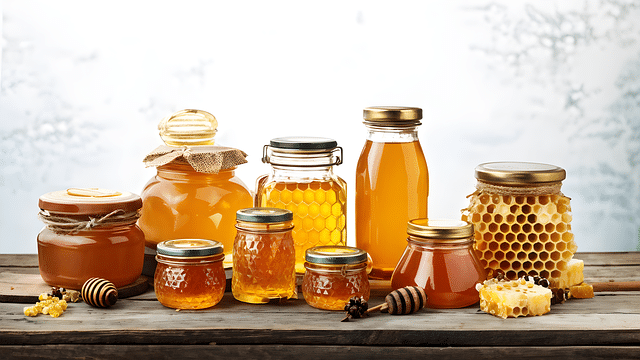
I sometimes hear clients proudly say “I use honey instead of sugar”. Raw honey is probably the most ancestral sweetener. It contains enzymes, polyphenols and even has mild antimicrobial properties.
Its sweetening power is high: so you can use less of it.
But again, is it necessary to sweeten or add honey to your yoghurt, for example?
In naturopathy, honey is considered a functional food, and as such, it’s eaten on its own. A little honey (barely heated, unpasteurised) has antioxidant and anti-inflammatory properties. It can improve certain metabolic markers (cholesterol, triglycerides, blood sugar) and has interesting antibacterial activity, particularly in the digestive system.
(not for babies under 1 year old, because their digestive system isn’t yet mature enough to prevent the development of a bacterium sometimes present in honey, which can cause a rare but serious infection called infant botulism).
Agave syrup
Often presented as a “natural” low-glycaemic-index sweetener, agave syrup owes much of its success to that argument.
Yet it’s particularly high in fructose. While fructose raises blood sugar little in the short term, it’s mainly metabolised by the liver and, in regular excess, can encourage the production of triglycerides and metabolic imbalances.
Finally, despite its natural image, agave syrup is a processed product.
A low glycaemic index therefore doesn’t automatically mean a better choice for metabolic health. Used all over the place, in too large a quantity, this syrup isn’t the best idea.

Coconut sugar
It’s credited with a lower glycaemic index and a small mineral content. Its taste is pleasant, almost caramelised, but its sweetening power is lower than whole sugar, so be careful not to use more.
Like whole sugar, it’s still mostly sucrose. So it stimulates insulin and keeps up the habit of the sweet taste. Its impact on the microbiome stays similar to that of a classic sugar when used regularly.
Stevia
Stevia (Stevia rebaudiana) is a plant with a very high sweetening power, with no calories.
It doesn’t raise blood sugar and seems to have a neutral, even slightly favourable, impact on metabolic regulation.
It’s therefore relevant for people with insulin resistance or diabetes.
Its main drawback is its slightly liquorice-like taste (some people don’t like it, at any rate) and the fact that it keeps up the sweet-taste habit. It doesn’t “re-educate” the palate.
Xylitol
Xylitol has a low glycaemic index, is less calorific than classic sugar, and even protects against cavities! On paper, it seems ideal.
But it’s a fermentable polyol. In people with sensitive intestines (dysbiosis, SIBO, irritable bowel), xylitol can cause bloating and digestive discomfort.
Above 15 to 20 grams, it becomes laxative.
Allulose
Allulose is a rare sugar, I’d say “fairly little known” still, very low in calories, with an almost nil effect on blood sugar. It seems barely fermentable and rather well tolerated, so with few downsides (apart from its price, around €35 a kilo).
In conclusion
There’s no perfect sweetener.
In naturopathy, the priority isn’t to systematically replace sugar, but to understand why we need sweetness… and in what quantities. A need for comfort (stress, low mood…)? A need for energy? (why?) Habit? A candida overgrowth (candida albicans, when present in excess, makes us crave sugar)?
Sometimes a little real sugar (whole, better all the same), eaten mindfully, will make more sense than a daily dependence on substitutes.
Chew. Slow down. Savour.
Relearn how to perceive the natural sweetness of foods, and relearn how to eat it sensibly.
The choice itself will also depend on the need and the person: digestive sensitivity, blood-sugar balance, taste…
FAQ
What's the best natural sweetener to replace sugar?
There’s no ideal sweetener for everyone. Honey, whole sugar and dates provide a few micronutrients, but remain high in sugars. Stevia and allulose have a very low effect on blood sugar. In naturopathy, the choice depends on your blood sugar, your digestion and your eating habits. The aim, above all, is to cut your sugar intake gradually.
Which sweetener to choose with diabetes or insulin resistance?
Stevia and allulose are two interesting alternatives, because they have little or no direct effect on blood sugar. Beware of false friends: honey, coconut sugar and agave syrup are still sugars. Even with a low glycaemic index, their use should be kept in check.
Which sweeteners to avoid with SIBO or irritable bowel syndrome?
Xylitol, a fermentable polyol, can cause bloating, gas and diarrhoea in people with sensitive intestines. Pure stevia can be a better-tolerated alternative. Watch the composition of products, though: some stevia-based preparations also contain polyols.
Are honey, coconut sugar and agave syrup better than white sugar?
Not necessarily! Honey and coconut sugar contain a few interesting compounds, but their nutritional benefits stay limited at the quantities usually eaten. As for agave syrup, its high fructose content can be a problem if eaten in excess. Natural therefore doesn’t necessarily mean better for your health.
Can you replace sugar without disturbing your gut microbiome?
Yes, but it all depends on the sweetener chosen and your digestive sensitivity. Some substitutes, notably polyols like xylitol, can cause digestive upset. The effects of the various sweeteners on the microbiome are still being studied. The best strategy is to favour a varied diet and gradually reduce your need for sweet taste.

I’m Céline Jablonski, a certified naturopath in Paris and online, a member of the Syndicat des Professionnels de la Naturopathie, and a trainer at a naturopathy school. I help people regain physical and emotional balance through naturopathic techniques (nutrition, physical activity, stress management, the use of plants…).
Through this blog, I share, in an accessible way, knowledge and experiences I find useful, to help you feel better.
This advice is not a substitute for, and should not stop you from, consulting your healthcare professional.